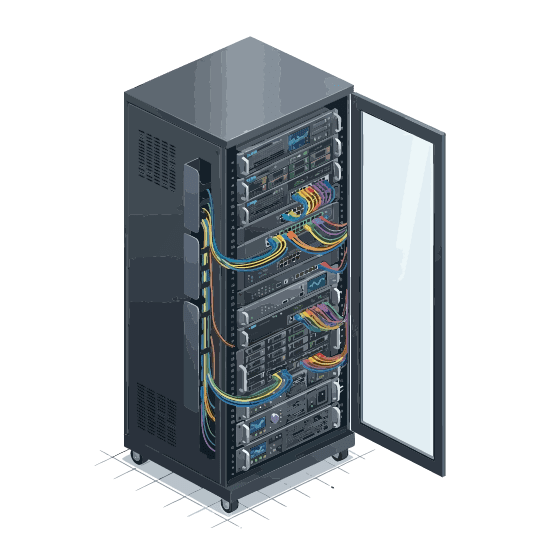
The number of connected devices in a typical business is growing rapidly. Smart sensors, CCTV cameras, alarm systems, access control, environmental monitors, vending machines, vehicle trackers, payment terminals, and a wide range of specialist equipment all rely on a network connection to do their job. Connecting all of these devices through your main business broadband creates security risks, management complexity, and performance problems that can be avoided with the right approach.
IoT broadband provides dedicated, managed connectivity specifically for your connected devices — keeping them online reliably, separating them from your core business network for security, and giving you a clear, manageable solution for the growing number of devices your business depends on.
We Do Your Comms supplies and manages IoT connectivity solutions for businesses across a range of industries and device types. Whether you have a handful of connected devices or a large-scale deployment, we'll help you find the right solution. Give us a call on 0117 982 9666 — we're here Monday to Friday, 8:30am to 5:30pm — and we'll talk through your requirements.






IoT broadband refers to connectivity solutions specifically designed for Internet of Things devices — the growing range of connected equipment that businesses rely on beyond traditional computers, phones, and servers. These devices typically have different connectivity requirements from standard business broadband: they may need to operate in locations without fixed network infrastructure, they often send small amounts of data rather than large volumes, they need to remain online reliably over extended periods, and they frequently require network segregation from the main business network for security reasons.
IoT connectivity is most commonly delivered via dedicated SIM cards on managed IoT data plans — providing mobile network connectivity for devices that need to operate independently of the fixed network, in the field, in vehicles, or at locations without broadband infrastructure. This approach is particularly suited to asset tracking, remote monitoring, smart sensors, and any device that needs to communicate from a location that isn't your office.
For devices within a fixed premises, IoT connectivity can also mean a dedicated network segment or VLAN that isolates IoT devices from the main business network — ensuring that a vulnerability in a connected device cannot be used as a route into the wider network. This network segregation is an increasingly important security consideration as the number and variety of connected devices grows.
Managing IoT connectivity centrally — with visibility of all devices, their data usage, and their status — gives businesses control over their connected infrastructure that consumer SIMs and ad hoc network connections simply don't provide.
Many businesses manage IoT device connectivity informally — connecting devices to the main Wi-Fi, using consumer SIM cards bought individually, or relying on the connectivity built into devices without considering how it's managed. This approach works until it doesn't, and the problems it creates are predictable.
Security is the most significant concern. IoT devices connected to the main business network without segregation represent a potential entry point for attackers. Many IoT devices have limited security capabilities and are infrequently updated — connecting them directly to the network that also carries your business data, client information, and cloud services creates a risk that proper network design eliminates.
Reliability is the second issue. Consumer SIM cards run out of data without warning, go offline in ways that aren't monitored, and have no management visibility. For devices that perform business-critical functions — access control, environmental monitoring, payment terminals, or remote sensors — this unreliability has direct operational consequences.
Management is the third. As the number of connected devices grows, managing connectivity through individual consumer SIMs or ad hoc network connections becomes increasingly difficult. A managed IoT connectivity solution provides central visibility, consistent billing, and the ability to manage all devices through a single platform.
Dedicated IoT SIM Cards — managed IoT SIM cards on business-grade networks, designed for the low-power, always-on connectivity requirements of IoT devices. Available across the major UK mobile networks with coverage appropriate to your deployment locations.
Managed Data Plans — IoT data plans sized for the actual data requirements of your devices, from minimal data for simple sensors and trackers through to higher allowances for video or data-intensive applications. Pooled data options available across multiple SIMs to avoid individual SIMs running out while others have unused allowance.
Network Coverage Selection — we select the most appropriate network based on coverage at your device locations. For deployments across multiple locations, multi-network SIMs can be configured to roam between networks and connect to the strongest available signal.
Network Segregation Advice — for IoT devices operating within a fixed premises, we provide guidance on network segregation — separating IoT devices onto their own network segment or VLAN to protect the main business network from the security risks associated with connected devices.
Central Management and Visibility — IoT SIM management through a central platform, providing visibility of all connected devices, their data usage, and their online status. Alerts can be configured for devices that go offline or exceed data thresholds.
Scalable Deployment — IoT connectivity can be deployed across any number of devices and scaled as your connected infrastructure grows, without needing to manage individual consumer contracts for each device.
Ongoing Support — as with all our services, your IoT connectivity is supported by our Bristol-based team, available Monday to Friday, 8:30am to 5:30pm.
Survey and Quotation — we discuss your device estate, coverage requirements, and data needs before recommending a solution, ensuring the connectivity is right for your specific situation.
Keep IoT devices off your main business network — proper network segregation for IoT devices is one of the most straightforward security improvements a business can make. Dedicated IoT connectivity makes this easy to implement and maintain, protecting your core business systems from the security risks that poorly managed connected devices introduce.
Central visibility of all connected devices — a managed IoT platform gives you a single view of every connected device, its status, and its data usage. You know what's online, what's offline, and where data is being consumed — rather than discovering a problem when a device stops working or an unexpected bill arrives.
No more individual consumer SIMs running out of data — pooled data plans across multiple IoT SIMs mean data is shared efficiently across your device fleet. Devices with higher usage draw from the pool rather than exceeding individual limits, and you have clear visibility of total consumption before it becomes a problem.
Reliable connectivity for business-critical devices — for devices that perform important functions — access control, environmental monitoring, remote sensors, payment systems — reliable connectivity isn't optional. Managed IoT SIMs on business-grade networks with monitoring provide the reliability that consumer solutions can't match.
Connectivity where fixed broadband isn't available — IoT SIMs work wherever the mobile network has coverage, making them ideal for devices in the field, in vehicles, at remote sites, or anywhere that a fixed network connection isn't practical or cost-effective.
Scales simply as your device estate grows — adding devices to a managed IoT platform is straightforward. As your business deploys more connected equipment, the connectivity management scales with it without requiring new individual contracts or manual SIM management for each device.
One supplier for all your connectivity needs — IoT connectivity managed alongside your business broadband, phone system, and other communications services by the same Bristol-based team. One relationship, one point of contact, one bill.
Step 1
Step 2
Step 3
Step 4
Step 5
IoT broadband supports any device that requires a network connection to function — smart sensors, CCTV cameras, access control systems, environmental monitors, vehicle trackers, payment terminals, vending machines, alarm systems, remote monitoring equipment, and a wide range of other connected devices. If your device needs a SIM card or a network connection to do its job, IoT connectivity is relevant to your situation.
You can — but it introduces security and management risks that dedicated IoT connectivity avoids. IoT devices often have limited security capabilities and are infrequently patched, making them potential vulnerabilities if connected directly to the same network as your business systems and data. Dedicated IoT SIMs or properly segregated network segments eliminate this risk. Management and visibility are also significantly better with a dedicated solution than with ad hoc connections to the main network.
A pooled data plan assigns a total data allowance across multiple SIM cards rather than individual allowances to each. If one device uses more data than expected in a given month, it draws from the shared pool rather than exceeding a hard individual limit. This approach is more efficient and avoids the situation where some SIMs run out of data while others have unused allowance. We’ll recommend the right total pool size based on your device estate and usage patterns.
Yes — multi-network IoT SIMs can be configured to roam between networks and connect to the strongest available signal at any location. This is particularly useful for deployments across multiple sites or for devices that move between locations, ensuring connectivity is maintained even if one network has weaker coverage at a particular site.
With a managed IoT platform, offline devices are detected automatically and alerts can be configured to notify you or our team when a device loses connectivity. This proactive monitoring means issues are identified quickly rather than being discovered when the device is needed and found to be non-functional. Our team can investigate and progress connectivity faults on your behalf.
Yes — IoT SIMs are well suited to vehicle-based deployments, including trackers, telematics devices, in-vehicle monitoring equipment, and connected tools or machinery. The SIM connects to whatever mobile network has the strongest coverage at the vehicle’s current location, providing reliable connectivity on the move.
Standard mobile broadband is designed for devices that need significant bandwidth — laptops, routers, video conferencing. IoT connectivity is designed for devices that need to be always on, send small amounts of data reliably, and operate with minimal management intervention over long periods. IoT SIM plans are typically lower cost per device, designed for low-power operation, and managed centrally across a fleet of devices rather than individually.
Yes — if you have IoT devices currently connected to your main business network and want to segregate them properly, we can advise on the right approach for your specific network environment. This may involve configuring a separate VLAN, setting up a dedicated wireless network for IoT devices, or other network design changes depending on your existing infrastructure. Get in touch and we’ll discuss what’s involved.
There is no practical limit — IoT management platforms are designed to scale from a handful of devices to thousands. Whether you’re managing five devices or five hundred, the platform provides the same central visibility and management capability. Adding new devices as your estate grows is straightforward.
Get in touch via the enquiry form on this page or call us on 0117 982 9666. We’ll discuss your device estate, your connectivity requirements, and the right solution for your situation — and provide a clear quotation. We’re here Monday to Friday, 8:30am to 5:30pm, and always happy to help.


Gas Flare had limited knowledge of the best way forward for our telephone and internet/Wi-Fi systems. ‘We do your comms’ have proved to be a great partnership. ‘We do your comms’ have helped Gas Flare every step of the way, With simple guidance and understanding. We would like to mention the help given by Anthony Teddy, he has given a lot of time to Gas Flare in setting up the systems. He has been at the end of the telephone with answers to any problems we have encountered, which have been very few. We would highly recommend ‘We do your comms’ to any company. They have been reliable, approachable and very friendly, and delivered what was agreed in a timely fashion.
Malcolm Krencjasz – Gas Flare Limited
This website uses cookies to improve your experience. Choose what you're happy with.
Required for the site to function and can't be switched off.
Help us improve the website. Turn on if you agree.
Used for ads and personalisation. Turn on if you agree.