Most businesses don't think about their data cabinet until something goes wrong. A network fault that takes hours to diagnose because nobody can tell which cable goes where. A critical connection accidentally pulled during routine maintenance. An engineer spending more time untangling cables than fixing the actual problem. These are the real-world consequences of a data cabinet that has grown organically over the years without proper organisation.
A Data Cab Tidy from We Do Your Comms puts that right. Our engineers visit your site, systematically work through your data cabinet, remove redundant cabling, neatly dress and route all active cables, label every connection clearly, and leave you with an installation that is organised, documented, and straightforward to work with — whether that's for day-to-day management, future changes, or emergency fault finding.
It's one of those jobs that's easy to put off and immediately obvious once it's done. Give us a call on 0117 982 9666 — we're here Monday to Friday, 8:30am to 5:30pm — and we'll arrange a visit to assess what's involved and provide a price.







A Data Cab Tidy is a professional service in which our engineers visit your premises, assess the current state of your data cabinet, and carry out a systematic tidy, dress, and label of all cabling and equipment within it.
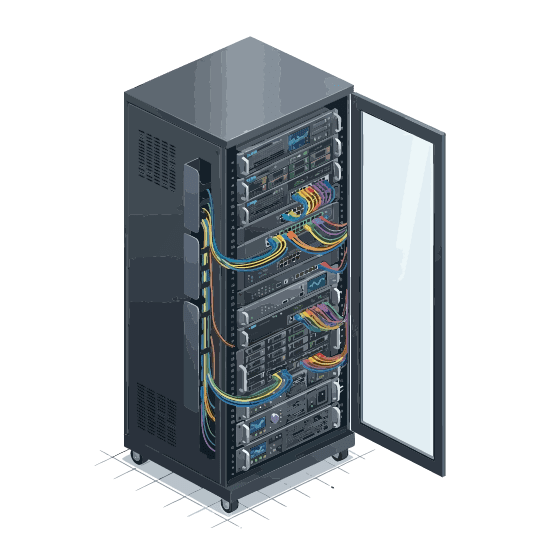
A data cabinet — sometimes called a comms cabinet or network cabinet — houses the core of your network infrastructure: patch panels, switches, routers, servers, uninterruptible power supplies, and all the cabling that connects them. In many businesses, particularly those that have grown over time or changed IT providers, the cabinet accumulates redundant cables, poorly routed connections, and absent or inaccurate labelling. What started as a neat installation gradually becomes difficult to navigate and potentially unreliable.
Our engineers work methodically through the cabinet, removing any cables that are no longer in use, neatly routing and dressing all active cabling using appropriate cable management, ensuring patch panel connections are properly made and secure, and clearly labelling every cable and connection at both ends. Where required, we also document the cabinet layout so there is a clear record of what connects to what.
The result is a cabinet that is visually tidy, functionally sound, and straightforward to work with — for our team, for your IT support provider, or for any future engineer who needs to access it.
Pricing is on application, as the scope of work depends on the size of the cabinet, the number of cables, and the current state of the installation. We'll always assess what's involved before providing a price.
A disorganised data cabinet is more than an aesthetic problem. In a well-run business, the network infrastructure is critical — it underpins everything from internet connectivity and phone systems to file access, cloud services, and security tools. When that infrastructure is housed in a cabinet that nobody fully understands, risks accumulate quietly.
Fault finding in a disorganised cabinet takes significantly longer. An engineer who can't quickly identify which cable does what has to work through the problem methodically and carefully — every minute spent tracing cables is a minute of downtime. In the worst cases, the wrong cable gets pulled, turning a manageable fault into a more serious one.
Future changes and additions are also harder when the cabinet is disorganised. Installing new equipment, upgrading existing connections, or simply moving a device becomes a more difficult and higher-risk task when the existing installation isn't clearly laid out.
A Data Cab Tidy is also worth considering before a significant infrastructure change — a new phone system, a network upgrade, or new structured cabling installation — to ensure the cabinet is in good order before new work is added to it. It's also a straightforward way to demonstrate to clients, auditors, or a new IT provider that your infrastructure is properly maintained.
On-Site Assessment — before any work begins, our engineer assesses the current state of the cabinet, identifies redundant cabling, notes any concerns, and confirms the scope of work with you.
Removal of Redundant Cabling — any cables that are no longer in use are identified and removed, reducing clutter and eliminating potential confusion about what is and isn't active.
Cable Dressing and Routing — all active cables are neatly dressed and routed using appropriate cable management techniques and equipment, ensuring tidy, organised runs that are easy to follow and don't obstruct access to equipment.
Patch Panel Tidying — patch panel connections are checked, neatly dressed, and confirmed to be properly seated and secure.
Full Labelling at Both Ends — every cable is clearly labelled at both ends, and patch panel ports are labelled to identify their connections. Clear, consistent labelling is what makes the cabinet genuinely usable after the tidy is complete.
Equipment Organisation — where appropriate, equipment within the cabinet is repositioned or reorganised to improve access, airflow, and logical grouping.
Cabinet Documentation — where required, we can provide a documented record of the cabinet layout, identifying what connects to what, which serves as a useful reference for future maintenance or changes.
Post-Work Review — at the end of the job our technician walks you through what has been done, confirms everything is working correctly, and answers any questions about the installation.
Faster fault finding when it matters most — when the network goes down or something stops working, a clearly labelled and well-organised cabinet means faults are identified and resolved in a fraction of the time. The difference between a fifteen-minute fix and a two-hour diagnosis often comes down to how well the cabinet is organised.
Reduced risk of accidental disruption — in a tangle of unlabelled cables, the risk of accidentally disconnecting something during maintenance or changes is real. A properly dressed and labelled installation makes it clear what everything does, dramatically reducing the chance of making things worse by mistake.
Easier and lower-risk future changes — adding new equipment, upgrading connections, or modifying the network is simpler and safer when the existing installation is clearly laid out and documented. Engineers can work with confidence rather than caution.
A professional installation you can be proud of — a well-organised data cabinet reflects well on the business. Whether you're showing clients around the office, welcoming a new IT provider, or simply wanting to know your infrastructure is properly maintained, a tidy cabinet gives you confidence.
Improved airflow and equipment longevity — tangled, poorly routed cables can restrict airflow within a cabinet, leading to higher operating temperatures for sensitive equipment. Properly dressed cabling improves airflow and can contribute to better equipment performance and longevity.
A clear record of your infrastructure — cabinet documentation means there is always a clear reference point for what connects to what, which is invaluable when onboarding a new IT provider, planning a network change, or dealing with a fault.
Done properly, by experienced technicians — a Data Cab Tidy isn't just about making things look neat. It requires methodical working, attention to detail, and an understanding of how network infrastructure should be laid out. Our engineers do this regularly and take pride in the quality of the work they leave behind.
Step 1
Step 2
Step 3
Step 4
Step 5
A data cabinet houses the core of your network infrastructure — switches, routers, patch panels, servers, and all the cabling that connects them. Over time, as businesses grow and change, cabinets accumulate redundant cables, poorly routed connections, and missing or inaccurate labelling. A Data Cab Tidy removes the redundant cabling, neatly organises what remains, and labels everything clearly — making the cabinet easier to work with, safer to maintain, and faster to fault-find when something goes wrong.
This depends on the size of the cabinet, the number of cables, and the current state of the installation. A small, moderately untidy cabinet might be completed in a half day. Larger or more complex installations may take a full day or more. We’ll assess what’s involved before the work begins and give you a clear indication of the time required.
We work carefully to minimise disruption, but some brief interruptions may be unavoidable when cables are being re-dressed or connections are being checked and reseated. We’ll discuss the best time to carry out the work with you — for many businesses, early morning or outside business hours is preferable to minimise impact. We’ll always confirm what disruption to expect before we start.
No — we only remove cables that have been identified as genuinely redundant and are confirmed to be inactive. Before any cable is removed, our engineer checks it is not carrying live data or providing an active connection. If there is any uncertainty about a cable’s purpose, it stays in place until its function is confirmed.
Yes — data cabinets in most businesses contain equipment from several different suppliers and installed at different times. Our engineers are experienced working across mixed environments and will approach the tidy methodically regardless of the variety of equipment present.
Yes — cabinet documentation is available as part of the service. This provides a written record of the cabinet layout, connections, and port assignments that serves as a useful reference for future maintenance, changes, or new engineer onboarding. Let us know at the point of enquiry if you’d like documentation included.
It’s primarily a one-off service, though many businesses choose to have a tidy carried out periodically — particularly after significant infrastructure changes or additions that have added new cabling to the cabinet. We’re happy to discuss the right approach for your situation.
Yes — cabinets of all sizes benefit from being well-organised. A small cabinet with a dozen cables is just as frustrating to work with when it’s unlabelled and tangled as a large one, and the benefits of a tidy are proportionally just as valuable. We’ll assess the scope and price accordingly.
If our engineer identifies a fault, damaged equipment, or a concern during the tidy — such as a failing switch, a poorly terminated cable, or a cable that shouldn’t be present — they’ll flag it with you before taking any action. We’ll explain what we’ve found and discuss the appropriate next steps, which may involve a separate piece of work or a referral to your IT support provider.
Get in touch via the enquiry form on this page or call us on 0117 982 9666. We’ll arrange a visit to assess the cabinet and confirm the scope and price before any work is carried out. We’re here Monday to Friday, 8:30am to 5:30pm, and always happy to help.


Gas Flare had limited knowledge of the best way forward for our telephone and internet/Wi-Fi systems. ‘We do your comms’ have proved to be a great partnership. ‘We do your comms’ have helped Gas Flare every step of the way, With simple guidance and understanding. We would like to mention the help given by Anthony Teddy, he has given a lot of time to Gas Flare in setting up the systems. He has been at the end of the telephone with answers to any problems we have encountered, which have been very few. We would highly recommend ‘We do your comms’ to any company. They have been reliable, approachable and very friendly, and delivered what was agreed in a timely fashion.
Malcolm Krencjasz – Gas Flare Limited
This website uses cookies to improve your experience. Choose what you're happy with.
Required for the site to function and can't be switched off.
Help us improve the website. Turn on if you agree.
Used for ads and personalisation. Turn on if you agree.