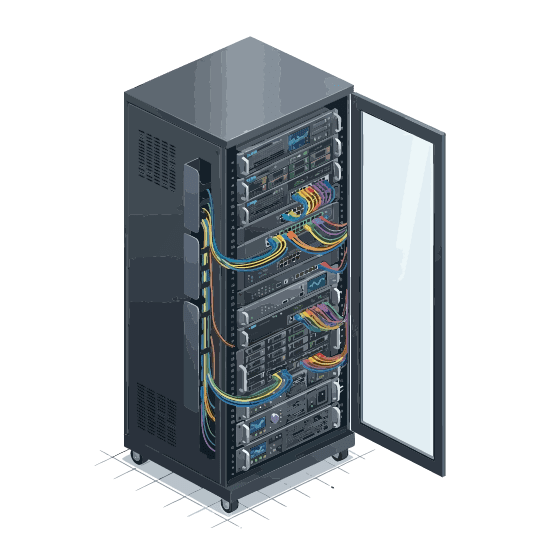
Every network — however sophisticated the switches, routers, and wireless access points — ultimately depends on the physical cabling underneath it. Get that infrastructure right from the start and everything built on top of it performs reliably, scales easily, and is straightforward to maintain. Get it wrong and you inherit a permanent source of unexplained faults, performance problems, and expensive remediation work further down the line.
Structured cabling is the planned, standardised approach to installing network infrastructure — designed for your building, installed to a high standard, tested on completion, and documented so there is a clear record of every connection. It's the right foundation for any business that takes its network seriously, whether that's a single-floor office, a multi-site operation, or a new build requiring a complete installation from scratch.
We Do Your Comms designs and installs structured cabling for businesses of all sizes across the region. Our engineers work neatly, minimise disruption, and leave every installation properly tested, labelled, and documented. Give us a call on 0117 982 9666 — we're here Monday to Friday, 8:30am to 5:30pm — and we'll arrange a survey to discuss your requirements.







Structured cabling is a standardised approach to designing and installing the physical cabling infrastructure of a network. Rather than running cables ad hoc as needs arise — which leads to the tangled, undocumented mess that many businesses inherit — structured cabling involves designing the installation as a whole, using consistent cable categories and termination standards, routing cables neatly through trunking and containment, terminating them properly at patch panels and wall outlets, testing every connection, and labelling and documenting the completed installation.
The result is a network infrastructure that performs to its rated specification, is consistent and predictable in its behaviour, is straightforward to maintain and extend, and is accompanied by documentation that means any competent engineer can understand and work with it.
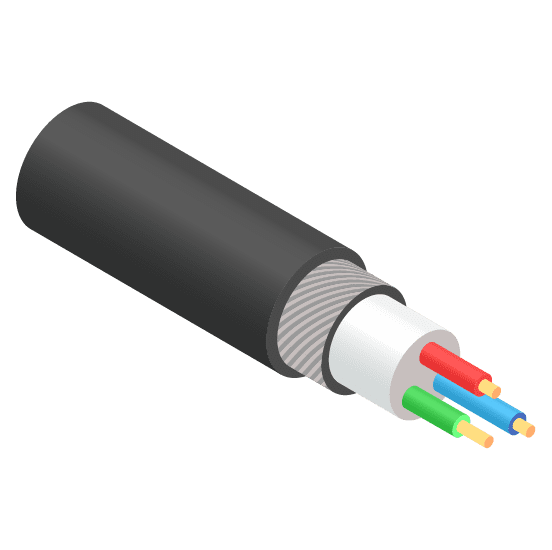
Structured cabling typically uses Cat6 or Cat6A twisted pair cabling for data networks, supporting Gigabit Ethernet as standard and capable of supporting 10 Gigabit Ethernet over appropriate distances. For longer runs or where interference is a concern, fibre optic cabling provides higher bandwidth and complete immunity to electromagnetic interference.
Installations range in scope from adding a handful of additional network points to an existing office, through to complete new installations in fit-out or new build premises involving hundreds of data points, multiple patch panels, server room infrastructure, and complex containment runs across several floors.
All installations are priced on application following a site survey, as the scope, materials, and labour required vary significantly depending on the size and complexity of the project.
The alternative to structured cabling — running cables informally as needs arise, without consistent standards or documentation — creates problems that compound over time. What starts as a minor convenience quickly becomes a collection of unlabelled cables of unknown routing, inconsistent termination quality, and no clear record of what connects to what. When something goes wrong, fault finding is slow. When changes are needed, the risk of disruption is high. When a new engineer takes over, they start from scratch.
Structured cabling is the right choice whenever a new network installation is being planned, whenever an existing installation is being significantly extended, or whenever the state of the current infrastructure is causing enough ongoing problems to justify addressing it properly.
It's particularly important for businesses moving into new premises — whether a new build, a fit-out, or a relocation. Installing structured cabling as part of the fit-out process is significantly cheaper and less disruptive than retrofitting it later, and it sets the network up correctly from the start rather than inheriting whatever was already in the building.
It's also the right foundation for businesses planning to upgrade their network — faster switches, additional access points, a new phone system, or expanded server infrastructure all perform better when the physical cabling underneath them is up to the task. No amount of investment in active network equipment compensates for poor physical infrastructure.
Site Survey and Design — before any work begins, our engineers carry out a detailed site survey, assess the requirements, and design the cabling infrastructure to suit the building layout, the number and location of data points needed, and any specific performance or future-proofing requirements.
Cat6 or Cat6A Data Cabling — installation of Cat6 or Cat6A twisted pair cabling to all data points, supporting Gigabit Ethernet as standard and, with Cat6A, 10 Gigabit Ethernet over extended distances. Cable category is selected based on your requirements and the distances involved.
Fibre Optic Cabling (where required) — for longer runs, inter-building connections, or environments where electromagnetic interference is a concern, single-mode or multimode fibre optic cabling can be installed as part of the structured cabling design.
Cable Containment and Trunking — all cables are routed through appropriate containment — trunking, conduit, cable trays, or basket tray — neatly installed and appropriate to the environment. Surface-mounted or concealed containment depending on the building and requirements.
Patch Panel Installation and Termination — all cables are terminated to patch panels in the data cabinet, providing a structured and accessible interface between the cabling infrastructure and the active network equipment.
Wall Outlets and Face Plates — data points are terminated to standard RJ45 wall outlets or floor boxes, neatly installed and flush with the wall or floor where appropriate.
Full Testing of Every Connection — every data point is tested on completion using a cable tester, verifying that terminations are correct, performance meets the rated specification, and every connection is clean and reliable before handover.
Labelling at Both Ends — every cable is labelled clearly at both the patch panel and the outlet end, using a consistent labelling convention that makes the installation straightforward to work with.
As-Built Documentation — on completion of every installation we provide as-built documentation recording the cable schedule, patch panel layout, and outlet locations. This is the reference point for future changes, maintenance, and any engineer who works on the installation in future.
Data Cabinet Installation (where required) — where a new data cabinet is required, we can supply and install a suitably sized rack or cabinet, configured to accommodate the patch panels, active equipment, and power requirements of the installation.
A network that performs to its rated specification — properly installed and tested structured cabling delivers the speeds and reliability the cable category is rated for. Poorly terminated or routed cabling introduces errors and performance degradation that no amount of active equipment can compensate for. Starting with a quality physical infrastructure means everything built on top of it performs as it should.
Faster and easier fault finding — when a network fault occurs, clear labelling, consistent termination, and accurate documentation mean the fault can be identified and isolated quickly. The difference between a well-documented structured installation and an unlabelled informal one can mean hours of difference in resolution time.
Simpler and lower-risk future changes — adding network points, relocating equipment, or reconfiguring the network is straightforward when the infrastructure is clearly documented and consistently installed. There are no surprises about routing, no unlabelled cables of unknown destination, and no risk of accidentally disrupting something else during a change.
Scalable as your business grows — structured cabling is designed with capacity and future growth in mind. Additional points can be added to the existing containment infrastructure, patch panels can be extended, and the system accommodates growth without requiring the whole installation to be revisited.
Professional installation that reflects well on your business — a neatly installed cabling infrastructure — visible in the cabinet, in trunking runs, and at the data points — reflects the care and professionalism your business brings to everything it does. Whether it's for your own confidence, a client visit, or an IT audit, it makes the right impression.
Documentation that retains value over time — the as-built documentation produced at the end of every installation continues to add value for as long as the cabling is in place. It supports engineer onboarding, IT provider handovers, future changes, and compliance — and it means the investment in the installation is never lost through lack of a record.
Installed by experienced engineers who take pride in the work — structured cabling quality is in the detail — the neatness of the containment runs, the precision of the terminations, the consistency of the labelling. Our engineers take that detail seriously and deliver installations they're proud to put their name to.
Step 1
Step 2
Step 3
Step 4
Step 5
Structured cabling is a standardised, planned approach to installing network infrastructure — designed before installation begins, routed consistently through proper containment, terminated to patch panels and outlets using consistent standards, tested on completion, and fully documented and labelled. Informal cabling — running cables as needs arise without a consistent approach — works in the short term but creates an increasingly unmanageable and fault-prone installation over time. Structured cabling is designed to remain reliable, maintainable, and well-understood for many years.
We install Cat6 as standard for most business applications, which supports Gigabit Ethernet comfortably and is appropriate for the vast majority of office environments. Where 10 Gigabit Ethernet support is required over longer distances, or where the installation is in a more demanding environment, we install Cat6A. We’ll advise on the appropriate category for your requirements during the survey process.
Yes — where the design calls for it. Fibre optic cabling is appropriate for longer cable runs where the distance exceeds the limits of copper cabling, for inter-building connections, and for environments where electromagnetic interference is a concern. We install both multimode and single-mode fibre as part of structured cabling installations.
This depends on the scale of the installation and the nature of the building. We plan installations carefully to minimise disruption and, where possible, schedule work outside business hours or in phases that allow normal business operations to continue. We’ll discuss timing and any likely disruption as part of the planning process before any work begins.
Yes — where a new data cabinet is required, we can supply and install a suitably sized rack or cabinet as part of the project. We’ll size and specify the cabinet based on the current and anticipated future requirements of the installation.
This varies considerably depending on the size and complexity of the project. A small installation — adding ten or twenty data points to an existing office — might be completed in a day. A larger installation across multiple floors, or a complete fit-out of new premises, will take longer. We’ll provide a clear programme as part of the quotation process.
Yes — every data point is tested on completion as a standard part of every installation we carry out. We use a cable tester that verifies each connection meets the rated specification of the installed cable category. Test results are available as part of the installation documentation if required.
Every installation is completed with as-built documentation covering the cable schedule, patch panel layout, and outlet locations. This gives you a clear, accurate record of the installation that supports future maintenance, changes, engineer onboarding, and compliance requirements.
Yes — extending an existing installation is straightforward when the original cabling is documented and consistently installed. If you have an existing installation that needs extending, we’ll survey what’s already in place and design the additional work to integrate cleanly with it.
Get in touch via the enquiry form on this page or call us on 0117 982 9666. We’ll arrange a site survey to discuss your requirements, assess the building, and provide a clear quotation. We’re here Monday to Friday, 8:30am to 5:30pm, and always happy to help.


Gas Flare had limited knowledge of the best way forward for our telephone and internet/Wi-Fi systems. ‘We do your comms’ have proved to be a great partnership. ‘We do your comms’ have helped Gas Flare every step of the way, With simple guidance and understanding. We would like to mention the help given by Anthony Teddy, he has given a lot of time to Gas Flare in setting up the systems. He has been at the end of the telephone with answers to any problems we have encountered, which have been very few. We would highly recommend ‘We do your comms’ to any company. They have been reliable, approachable and very friendly, and delivered what was agreed in a timely fashion.
Malcolm Krencjasz – Gas Flare Limited
This website uses cookies to improve your experience. Choose what you're happy with.
Required for the site to function and can't be switched off.
Help us improve the website. Turn on if you agree.
Used for ads and personalisation. Turn on if you agree.